
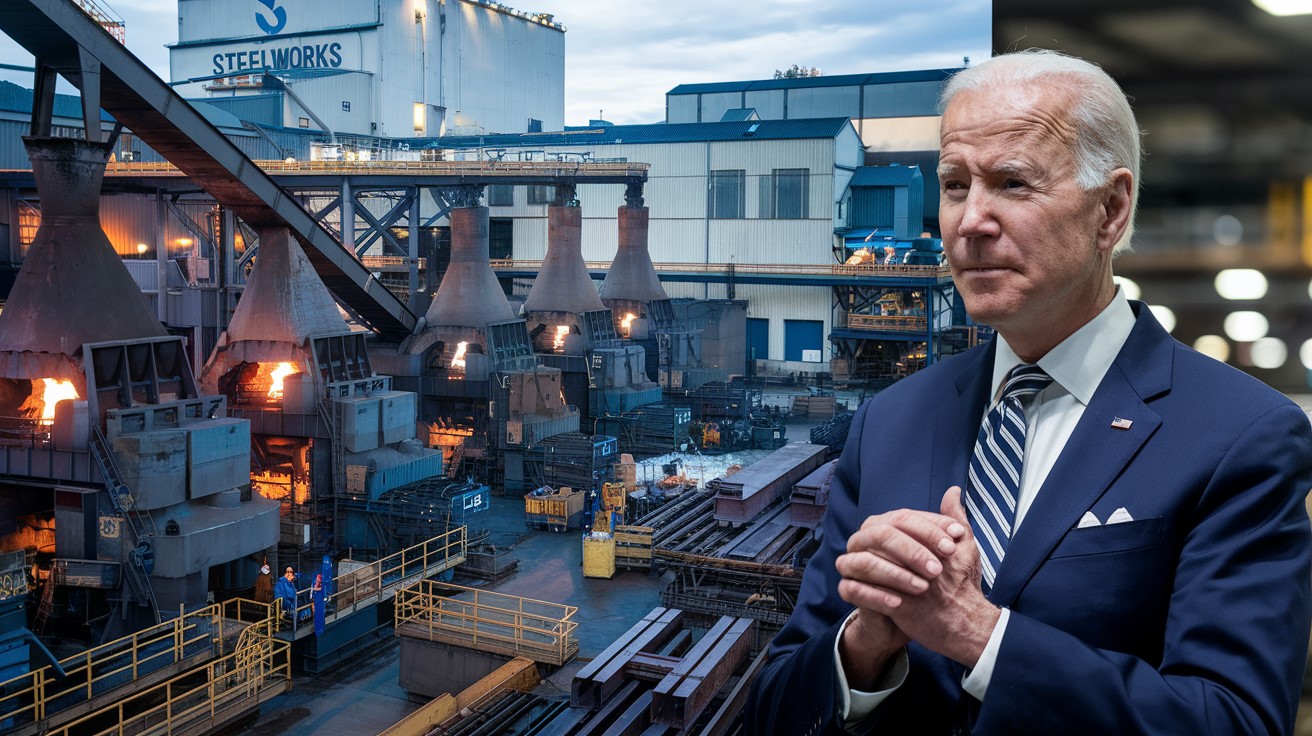
President Joe Biden appears poised to block Nippon Steel Corp.’s ambitious $14.1 billion acquisition of United States Steel Corp., according to sources familiar with the situation. The news has already shaken the markets, with shares of US Steel ($X) plunging 17% by the close of trading on Wednesday, marking their biggest decline since April 2017.
This development has thrust the deal into the limelight, particularly in the politically significant state of Pennsylvania, where both US Steel and the powerful United Steelworkers union, which opposes the deal, are based. The proposed acquisition is currently undergoing a review by the Committee on Foreign Investment in the United States (CFIUS). Sources indicate that Biden plans to block the transaction as soon as the CFIUS recommendation lands on his desk, potentially as early as this week.
US Steel’s Defensive Stance and the Role of CFIUS
US Steel responded to the looming threat by stating its intention to “pursue all possible options under the law” to complete the deal. The company insists that the transaction poses no national security concerns, pointing to Japan’s status as a close U.S. ally. However, CFIUS, a secretive panel that reviews foreign acquisitions for national security risks, has not yet made its final recommendation to the president.
Given CFIUS’s history of opaque decision-making, the market remains on edge, with traders and investors left to speculate on possible outcomes. Blocking the deal could open the door to litigation, with no indications that Nippon Steel is ready to withdraw its bid voluntarily.
Political Ramifications and Legal Complications
The acquisition has sparked a political debate, drawing attention from both sides of the aisle. Vice President Kamala Harris has already expressed her opposition, aligning with Biden’s stance that US Steel should remain domestically owned. Meanwhile, former President Donald Trump, Harris’s likely opponent in the upcoming election, has also promised to block the deal if he returns to office.
This bipartisan opposition adds a layer of complexity to the potential for any legal challenges. With little precedent for blocking deals involving companies from allied nations, proponents of Nippon Steel argue that rejecting the bid could set a troubling standard, especially as the U.S. seeks to bolster its industrial competitiveness against China.
Nippon Steel’s Strategy Amidst Regulatory Hurdles
Nippon Steel isn’t backing down easily. Over the past two weeks, it has made several moves to address potential regulatory concerns, including a fresh $1.3 billion commitment, a proposal to use an American-majority proxy board, and a warning from US Steel about the economic fallout should the deal collapse. Nippon Steel’s leadership has been vocal, urging the U.S. government to handle the process in accordance with the law and reiterating that the acquisition poses no national security threat.
The last time a U.S. president intervened through CFIUS to block a deal was in May when Biden ordered a Chinese crypto company to sell land near a U.S. Air Force base. Historically, only seven deals have been blocked through CFIUS, underscoring the significance of Biden’s impending decision on this case.
Market Implications and the Road Ahead
For investors, the uncertainty surrounding the fate of US Steel could lead to further volatility. A blocked deal might force US Steel to shutter some of its legacy facilities, which would have substantial economic and employment implications in states like Pennsylvania. The company has already warned that such an outcome could jeopardize thousands of jobs and potentially necessitate a relocation of its headquarters from Pittsburgh.
If the acquisition fails, market participants will need to closely monitor US Steel’s next steps. The company might need to pivot its strategy, potentially pursuing alternative mergers, partnerships, or restructuring efforts to remain competitive in the global steel market. Traders should also keep an eye on potential ripple effects across the sector, particularly if this decision is viewed as a broader indication of tightening U.S. scrutiny on foreign investments.
Key Takeaways
- Biden’s move to block the Nippon Steel acquisition of US Steel signals heightened scrutiny on foreign takeovers, even from allied countries.
- The decision has significant political implications, drawing responses from both the current administration and potential future leaders.
- Investors should prepare for continued volatility in US Steel shares and watch for any subsequent legal battles or strategic shifts by the involved companies.


