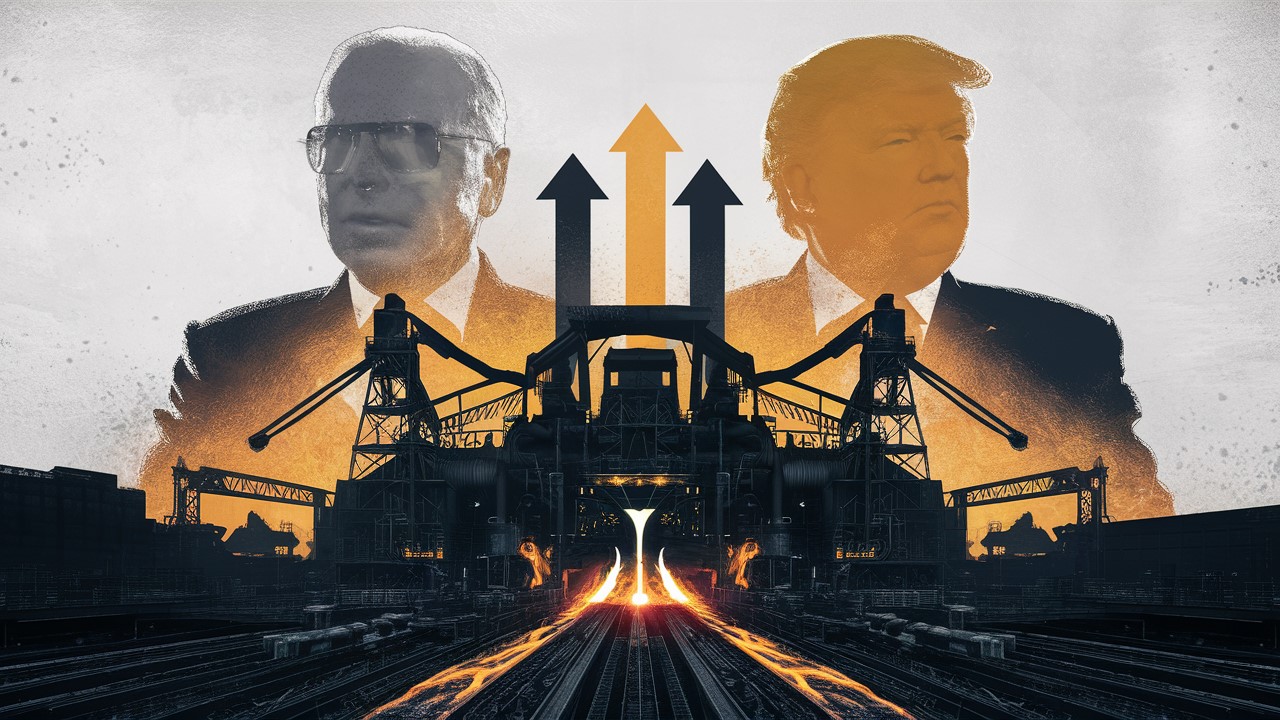
As the 2024 U.S. presidential election draws near, the spotlight has once again fallen on the American steel industry, which has unexpectedly united both Joe Biden and Donald Trump in their political agendas. Amidst a broad array of divisive issues, their shared focus on reviving domestic steel manufacturing highlights the industry’s disproportionate political influence, particularly in crucial battleground states such as Pennsylvania. This shared emphasis on protecting the industry from foreign competition is manifesting in proposals for significant tariff increases on imported steel, a policy aimed at bolstering domestic production to the benefit of local economies and employment.
President Biden and his predecessor, Trump, have both proposed substantial tariff hikes on steel imports from China—a move that signifies a robust alignment on at least one front: the safeguarding of American industrial jobs. Biden’s administration is poised to increase tariffs on Chinese steel products from 7.5% to 25%, while Trump has suggested an even more drastic rise to 60% for all Chinese imports. Both leaders are staunchly opposed to the potential acquisition of United States Steel, a historic firm based in Pittsburgh, by Japan’s Nippon Steel.
The repercussions of such tariffs are significant, touching various sectors of the economy. Ralph Hardt, the owner of Belleville International in Butler, Pennsylvania, outlines the challenges faced by businesses that rely on imported metals. The imposition of a 25% tariff, for example, would escalate the cost of a $1 million steel purchase to $1.25 million, putting a financial strain on manufacturers that depend on these materials for their products. The debate extends to the fairness of trade practices, with allegations that Chinese firms, supported by government subsidies, undercut U.S. producers by dumping cheap steel on the market.
The impact of previous tariffs, introduced by Trump in 2018, was already palpable across major U.S. manufacturers such as General Motors, Ford Motor, Caterpillar, and Whirlpool, each incurring costs exceeding $1 billion. Despite these economic pressures, Biden has maintained, and now seeks to intensify, these protective tariffs. This stance is supported by figures like Cleveland-Cliffs CEO Lourenco Goncalves, who advocates for stricter controls on steel routed through third countries like Mexico to evade tariffs.
Meanwhile, United States Steel’s stature has diminished over the years. Once a cornerstone of American industrial might, it now ranks behind Nucor and Cleveland-Cliffs in production capacity. The company’s potential sale to Nippon Steel, which proposed a purchase price of $55 per share, has sparked a fierce backlash from both political leaders and the public, highlighting concerns over foreign ownership and control over critical industries.
In Braddock, Pennsylvania, where U.S. Steel’s Edgar Thomson plant remains a significant employer, the community reflects the broader economic challenges and uncertainties faced by the steel industry. Local politicians and the United Steelworkers union have voiced strong opposition to the sale, stressing the importance of keeping such strategic assets under American control.
In conclusion, the bipartisan agreement between Biden and Trump to bolster the American steel industry underscores the intricate relationship between politics and economic policy. Their actions aim to secure political leverage in key states by prioritizing national industry, job security, and economic sovereignty. However, the broader implications of these policies—ranging from increased production costs to international trade relations—will play a crucial role in determining the future competitiveness of American steel on the global stage. The outcome of these political decisions will undoubtedly have lasting effects on the U.S. economy and its industrial landscape.