
Telecom’s market structure is flashing a warning: the wireless carriers are taking the hit, while the infrastructure owners are attracting buyers. Verizon was headed for its worst session since 2002 after SpaceX announced a spectrum agreement with Grain Management, exposing how quickly competitive concerns can spread across an established sector.
The reaction was not uniform. Shares of Verizon, AT&T and T-Mobile came under pressure as SpaceX’s Starlink business expanded deeper into telecom, while telecom tower REIT stocks moved higher. That split is the real story for traders: the market may be beginning to distinguish between companies that sell wireless connectivity and those that provide the infrastructure supporting it.
A sharp divide inside telecom
The source-reported move in Verizon was severe by historical standards. A session described as the company’s worst since 2002 is not routine sector noise; it indicates that investors viewed the SpaceX-Grain Management agreement as relevant to the competitive landscape surrounding legacy carriers.
That does not establish the deal’s long-term financial impact. It does, however, explain why the pressure extended beyond Verizon. AT&T and T-Mobile also faced share-price pressure as the market assessed the possibility of deeper competition from SpaceX and Starlink. The immediate issue is less about a fully defined earnings impact than about a shift in perceived strategic risk.
For incumbent wireless operators, the concern is straightforward. A deeper Starlink presence in telecom could intensify questions about how traditional carriers defend their position as satellite connectivity becomes more closely tied to the broader communications market. Investors may be reassessing the durability of the advantages that have supported the legacy wireless model.
Why tower REITs moved the other way
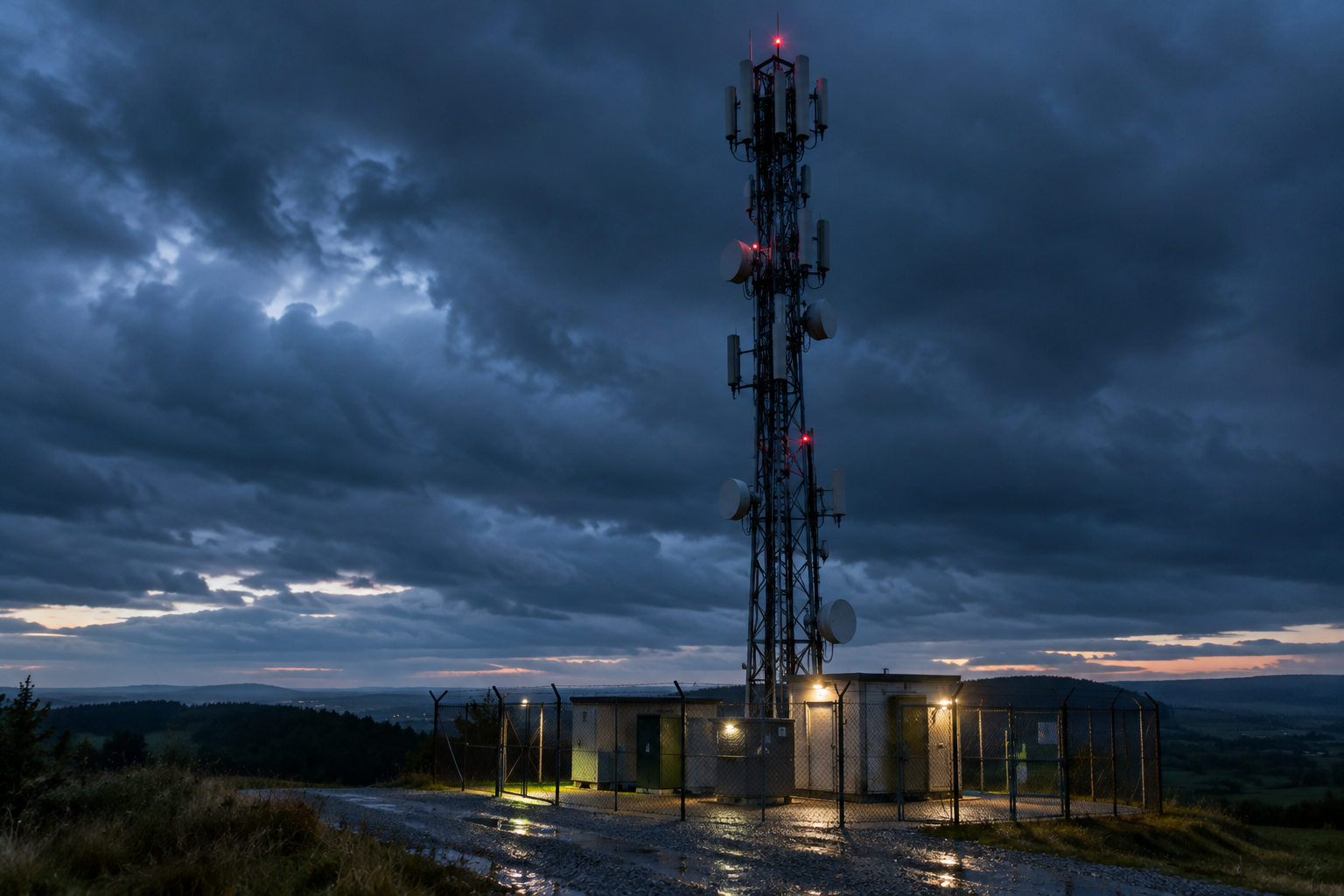
Telecom tower REIT stocks rose following the announcement, producing a notable divergence from the weakness in wireless carriers. That response suggests the market may be viewing communications infrastructure as a potential beneficiary of a more connected and competitive network environment.
The distinction matters. Carriers face the burden of competing for customers and managing the strategic consequences of new connectivity options. Tower companies, by contrast, occupy a different position in the telecom structure. Their assets are part of the infrastructure layer, which may remain relevant even as the competitive mix among network operators changes.
That is not a claim that every tower REIT will benefit equally, nor does the reported move prove a lasting rotation. It does suggest that traders are separating operating-model exposure within telecom rather than treating the group as a single trade. The market reaction is detailed in CNBC’s report on the Verizon, AT&T and T-Mobile response, while Seeking Alpha reported the rise in telecom tower REIT stocks.
The trader’s map: carriers versus infrastructure
This is where the potential long/short sector-rotation framework emerges. The market is showing relative strength in telecom infrastructure alongside weakness in legacy wireless carriers. A trader watching that relationship may focus less on the absolute direction of the entire sector and more on whether the divergence persists.
The key test is whether the SpaceX-related concern remains a one-session repricing or develops into a broader reassessment of carrier competition. Verizon’s worst-session framing since 2002 gives the event unusual visibility, but it does not by itself quantify the eventual business impact. The agreement’s longer-term implications remain unsettled.
For now, the market has delivered a clear message: SpaceX’s deeper telecom involvement has pressured $VZ, AT&T and $TMUS, while tower infrastructure has moved in the opposite direction. That contrast may become the more important signal than any individual stock move.
Bull/Bear Verdict
Bull Case: The rise in telecom tower REIT stocks alongside pressure on Verizon, AT&T and $TMUS may indicate a sector rotation toward infrastructure exposure as SpaceX expands deeper into telecom.
Bear Case: The agreement’s long-term impact remains uncertain, and Verizon’s worst session since 2002 could represent a sharp repricing of concern without establishing a durable advantage for tower infrastructure.