
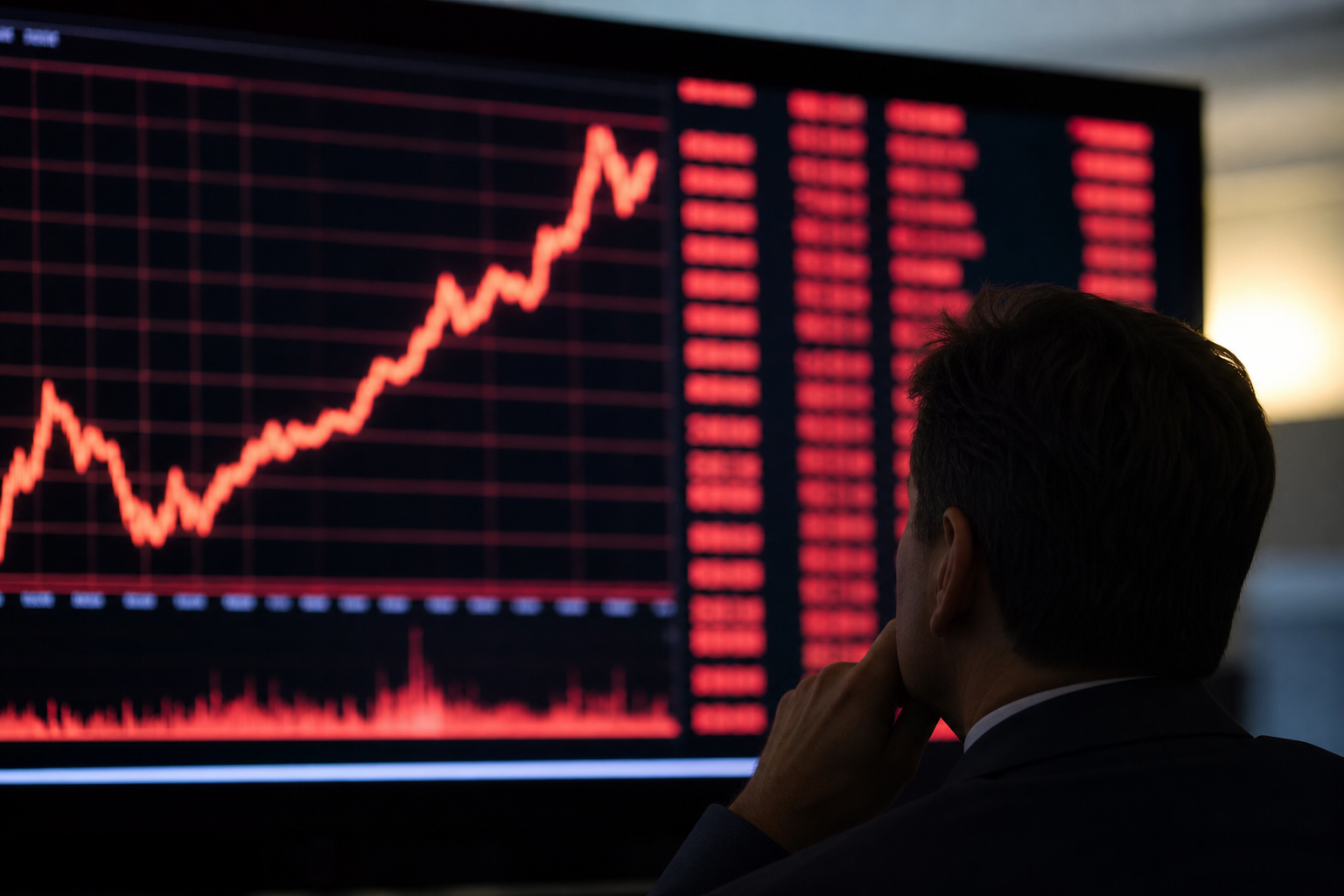
The recent surge in the 30-year Treasury yield to 5.1% is a clarion call for investors navigating the complexities of today's market. As we witness this uptick, the implications for equity valuations and investor sentiment are profound and warrant serious consideration.
Firstly, let's dissect the significance of this yield. A 5.1% return on a 30-year Treasury bond is not just a number; it’s a signal that the landscape of fixed-income investments is shifting. Historically, when Treasury yields rise, it often translates to higher borrowing costs across the board, which can dampen consumer spending and corporate investments. This creates a ripple effect that could weigh heavily on equity markets.
Equity valuations, especially for growth stocks, are particularly sensitive to interest rate movements. As yields rise, the present value of future cash flows from these equities diminishes, leading to potential re-evaluation. The market may turn bearish on high-valuation tech stocks, as investors recalibrate their expectations against the backdrop of increased borrowing costs and an uncertain inflation outlook.
In this context, we must also consider the role of the Federal Reserve, especially under the stewardship of the new chair, Kevin Warsh. Warsh's approach to managing inflation and interest rates will be pivotal. His past statements suggest a cautious approach to policy changes, yet the current economic indicators may push him towards a more hawkish stance. Should inflation persist, further interest rate hikes could be on the table, exacerbating the challenges faced by equity markets.
The specter of ongoing inflation is another critical factor. Recent inflation signals have muddied expectations about the Fed's trajectory. If inflation continues to surprise to the upside, the Federal Reserve may be compelled to act more aggressively. This brings us to a crucial juncture: will Warsh prioritize controlling inflation over sustaining the economic recovery? The answer to this question could define market dynamics in the coming months.
Investor sentiment hangs in the balance. A jump in Treasury yields often leads to a flight to safety, prompting investors to reassess their risk exposure. This means a potential reallocation of assets away from equities and into safer fixed-income securities. Such a shift could lead to increased volatility in the stock market as money flows out of equities and into bonds.
In summary, the recent spike in the 30-year Treasury yield to 5.1% is more than a mere statistic; it’s a potent reminder of the shifting economic landscape. Investors must remain vigilant, as rising yields could signal a turbulent period ahead in equity markets. The interplay between inflation, Federal Reserve policy, and investor sentiment will be crucial as we navigate these uncharted waters.
For further details on this topic, visit this source.