
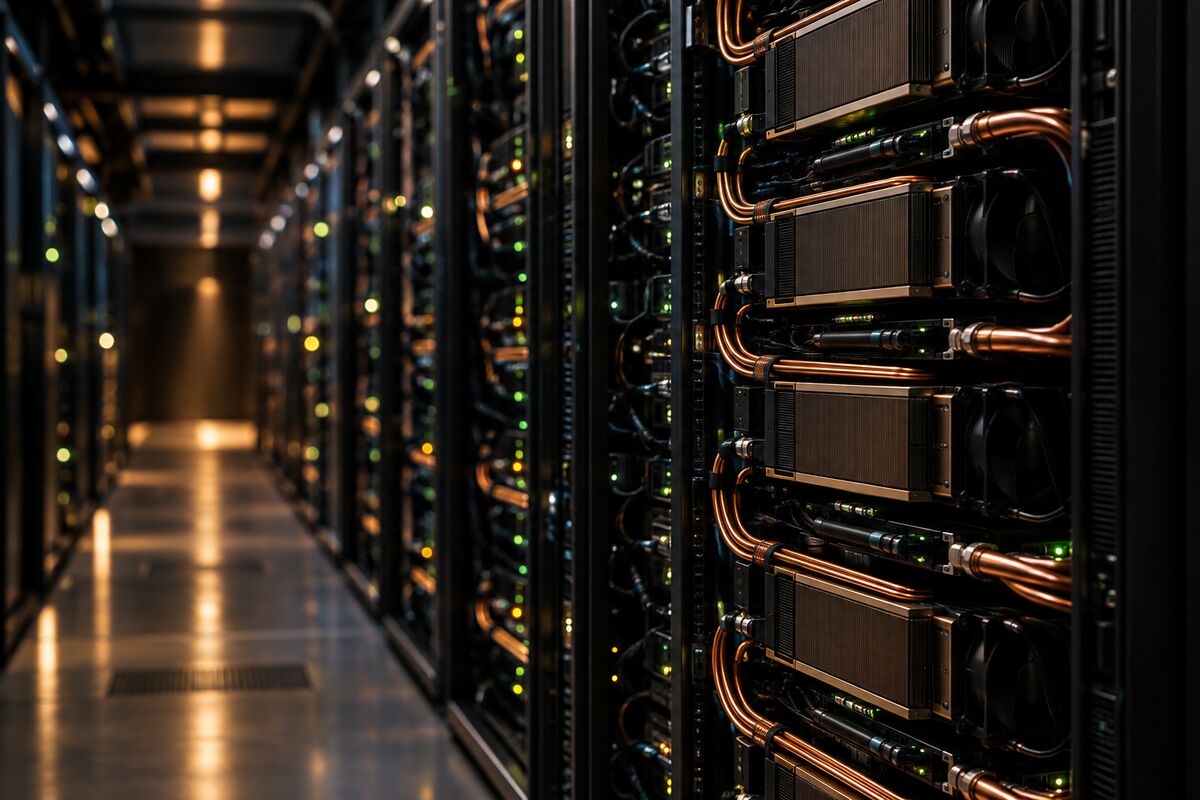
The neocloud debate has reached its most uncomfortable question: what happens when the machines powering the AI boom are financed with obligations that still have to be serviced? Nebius is pushing back against bearish arguments by saying AI-computing, or GPU, prices are rising—a defense that puts pricing power at the center of a wider argument over debt, costs and the durability of the infrastructure buildout.
That position may give investors a more favorable lens on the company, but it does not settle the debate. Higher GPU prices could support revenue and suggest that demand remains strong. They do not, on their own, establish that the business can translate those prices into durable operating gains after hardware costs, financing expenses and the capital required to keep expanding are accounted for.
The distinction matters for $NBIS, as well as for the broader neocloud conversation. These companies sit between enormous demand for AI capacity and the expensive physical infrastructure needed to supply it. Their proposition depends on acquiring computing equipment, putting it to work for customers and generating enough economic value to justify the required investment. When that investment includes debt, the model becomes sensitive not only to customer demand but also to borrowing costs.
Investors are increasingly scrutinizing that financing structure. The concern is not simply whether customers want GPU capacity. It is whether the revenue from that capacity can support the full cost of building and maintaining it. Debt introduces a second clock into the business: equipment and capacity may be deployed in anticipation of future demand, while interest and other financing obligations continue regardless of how quickly that demand develops.
Nebius’s response focuses on the other side of the equation. If GPU prices are rising, the company’s argument challenges the idea that AI-computing capacity is becoming an increasingly commoditized service with weakening economics. Rising prices may indicate that demand is outpacing available capacity, or that providers retain some ability to charge more for scarce computing resources. Either possibility could improve the market’s view of pricing power.
But pricing power is not the same as financial strength. A higher price for computing may support the top line while leaving open questions about the cost of the equipment behind that service. It may also coexist with significant capital requirements and debt service. The central investor test, therefore, is not whether GPU prices are rising in isolation. It is whether those prices remain sufficient after the broader cost structure is considered.
That is where the debate becomes particularly important for technology investors. A pricing argument can challenge a bearish narrative without eliminating the risks that created it. Investors may view Nebius’s statement as evidence that demand and capacity constraints are providing support for AI infrastructure. Skeptics may respond that strong pricing today does not necessarily demonstrate that financing structures are sustainable across a longer buildout.
The disagreement could also keep $NBIS volatile as market participants weigh competing interpretations of the same industry signal. For volatility traders, the tension lies between a company defending its unit economics and investors questioning the balance sheet logic supporting expansion. For those studying AI-infrastructure pairs trades, the issue is similarly less about a single headline than about how different businesses absorb debt costs, capital intensity and changes in computing prices. Any comparison would need to distinguish those factors rather than treat all neocloud exposure as identical.
The market’s response may ultimately depend on which part of the argument carries more weight. Rising GPU prices could reinforce the view that AI infrastructure providers have meaningful pricing power. At the same time, skepticism over debt and borrowing costs may persist because pricing alone does not answer how much capital is required, how long that capital must remain committed or whether customer demand can support the entire structure.
Nebius has offered investors a counterpoint to the most pessimistic reading of neocloud economics. The company’s position suggests that the industry may not be facing an immediate collapse in computing prices. Yet the larger question remains stubbornly intact: can pricing strength translate into a durable business once hardware spending, financing costs and expansion demands are included? Until that distinction is clearer, the neocloud story remains less a clean growth narrative than a tug of war between demand and the cost of meeting it.
CNBC’s report on Nebius’s argument over rising GPU prices captures the fault line: the company is defending the value of its computing capacity while investors continue to examine the financial machinery behind the sector.
Bull/Bear Verdict
Bull Case: Nebius’s claim that GPU prices are rising could support the view that AI-computing demand remains strong and that providers may retain meaningful pricing power.
Bear Case: Higher GPU prices may support revenue arguments, but they do not resolve investor concerns about debt, borrowing costs, capital intensity or whether the broader neocloud model can sustain its obligations.