
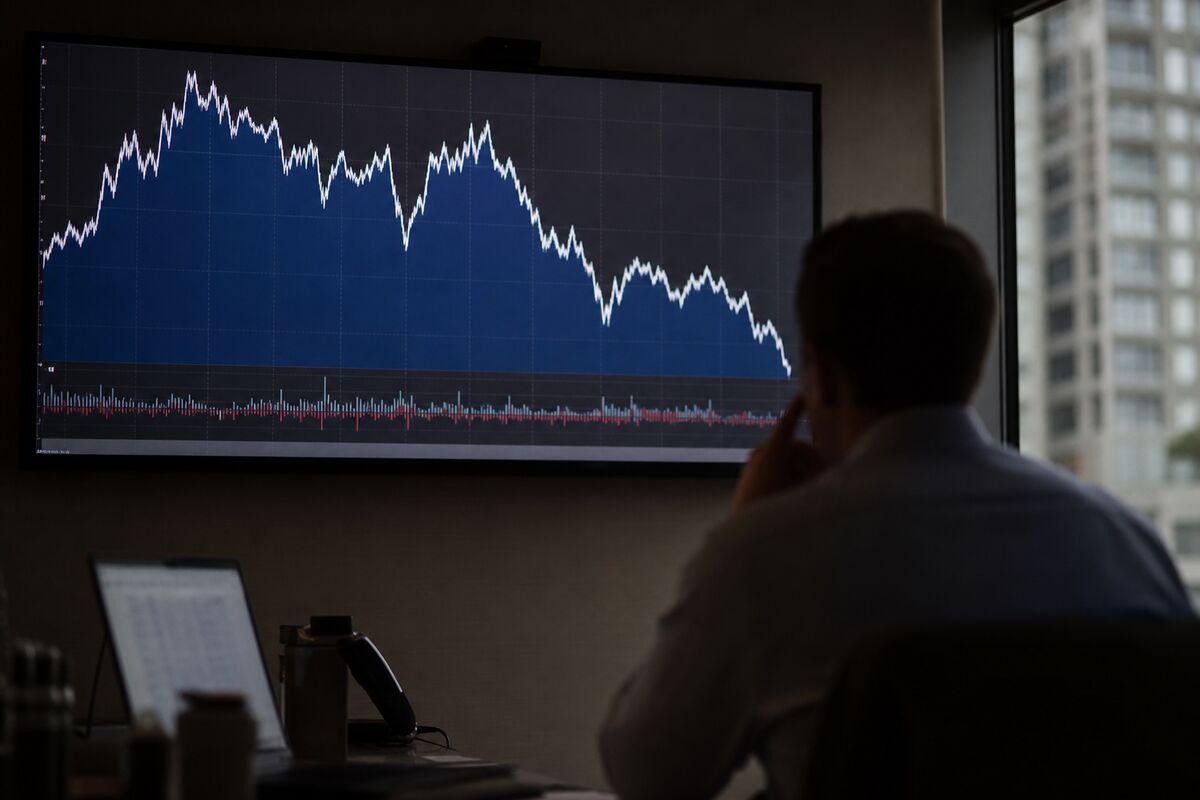
The Nasdaq Composite has entered correction territory, and the market's most devoted buy-the-dip faithful are facing an uncomfortable question: Does history rhyme this time, or does it break character entirely?
For decades, the playbook has been simple. Markets stumble, algorithms twitch, and patient capital steps in to catch the falling knife. But November 2026 presents a wrinkle that historical recovery patterns may not account for—a technology sector reckoning rooted in the unsustainable economics of artificial intelligence spending, paired with a capitulation event among retail traders that hasn't been seen since the pandemic panic of 2020.
The Correction Arrives, History Takes Center Stage
When an index slides into correction territory, investors instinctively reach for the history books. According to CNBC's analysis of historical recovery patterns, the question of what typically happens next carries real weight for portfolio managers weighing whether to deploy dry powder or hunker down.
The Nasdaq's historical record offers some comfort to optimists. Past corrections have been followed by recoveries, and the data on those rebounds provides a roadmap—albeit one that assumes the underlying cause of the decline doesn't represent a structural shift in how markets value technology and growth. That assumption, however, may be the crux of the matter in 2026.
The AI Reckoning Beneath the Surface
This is no ordinary correction driven by rate expectations or earnings misses in isolation. The Nasdaq's slide reflects a broader technology rout rooted in questions about artificial intelligence spending—specifically, whether the billions being poured into AI infrastructure can generate returns that justify the capital deployment. That's a fundamental valuation question, not a cyclical one.
When corrections are driven by sentiment or technical factors, historical recovery patterns tend to hold. When they're driven by investors repricing the economics of an entire sector, the playbook becomes less reliable. The tech-heavy Nasdaq is caught between these two forces: the gravitational pull of historical mean reversion, and the undertow of a spending cycle that may have run ahead of its fundamentals.
Retail Capitulation Signals a Shift in Sentiment
Adding fuel to the uncertainty: retail traders have dumped stocks at a scale not seen since the Covid crash. This single-day retail selling record carries outsized significance for market psychology. Retail traders are often characterized as momentum followers, the last to sell in a downturn. When they capitulate en masse, it suggests that fear—not mere profit-taking—is driving behavior.
That dynamic cuts both ways. On one hand, capitulation events can mark exhaustion points where selling pressure finally eases. On the other, they may indicate that smaller investors are fleeing a market structure they sense is breaking, even if they can't articulate exactly why. In 2026, with AI enthusiasm having run so far ahead of evidence, retail selling could signal that Main Street is finally pricing in what Wall Street has been slow to acknowledge.
The Momentum Strategy Reckoning
For traders who have built fortunes on momentum and mean reversion, this correction presents a fork in the road. The buy-the-dip thesis assumes that declines are temporary aberrations in an uptrend. But if the Nasdaq's correction reflects a genuine repricing of technology valuations—a recognition that AI spending may not generate the returns once promised—then momentum strategies designed to ride recoveries could face headwinds.
The historical recovery patterns that once provided comfort may offer false reassurance if the market is in the early stages of a longer, more painful adjustment. Conversely, if this is merely a correction within a larger uptrend, traders who sit on the sidelines could miss a significant rebound.
The Year-End Reckoning
Heading into the final weeks of 2026, the implications for risk appetite and liquidity are profound. If the Nasdaq's correction proves to be a buying opportunity—as history might suggest—we could see a reversal of the retail selling and a return to the risk-on momentum that dominated earlier in the year. If, however, this marks the beginning of a sustained reassessment of AI economics, the Nasdaq could face a longer period of consolidation or decline.
The traders and investors making decisions today are essentially betting on which historical precedent applies: the correction that bounced, or the correction that announced a trend change. In a market where artificial intelligence itself is supposed to improve decision-making, the irony is that no algorithm can tell you which history you're living through until it's already written.
Bull/Bear Verdict
Bull Case: Historical recovery patterns suggest the Nasdaq's correction could be temporary, and record retail selling may indicate capitulation—a signal that fear-driven selling could exhaust itself, potentially opening the door to a rebound. If the correction proves to be a typical pullback within a larger uptrend, buy-the-dip traders could see mean reversion work in their favor.
Bear Case: The Nasdaq's decline reflects more than sentiment—it may signal a fundamental repricing of AI spending economics. Record single-day retail selling since the Covid crash suggests that smaller investors sense a structural shift, not merely a cyclical correction. If the rout is driven by questions about whether AI capital deployment can justify valuations, historical recovery patterns may provide false comfort, and the index could face sustained pressure into year-end.