
The AI trade has exposed traders to a difficult mismatch: equity and options markets can reprice semiconductor and infrastructure names quickly, while the physical computing capacity behind the theme is harder to hedge directly. A proposed market for GPU futures could begin to close that gap.
Hyperbolic, led by former Citadel quant Jasper Zhang, is developing software for “physical” AI futures contracts tied to GPU capacity. The concept remains an emerging market structure—not evidence of a widely traded product—but it offers a potentially important idea for desks navigating volatility across the AI-compute ecosystem.
A hedge linked to the physical bottleneck
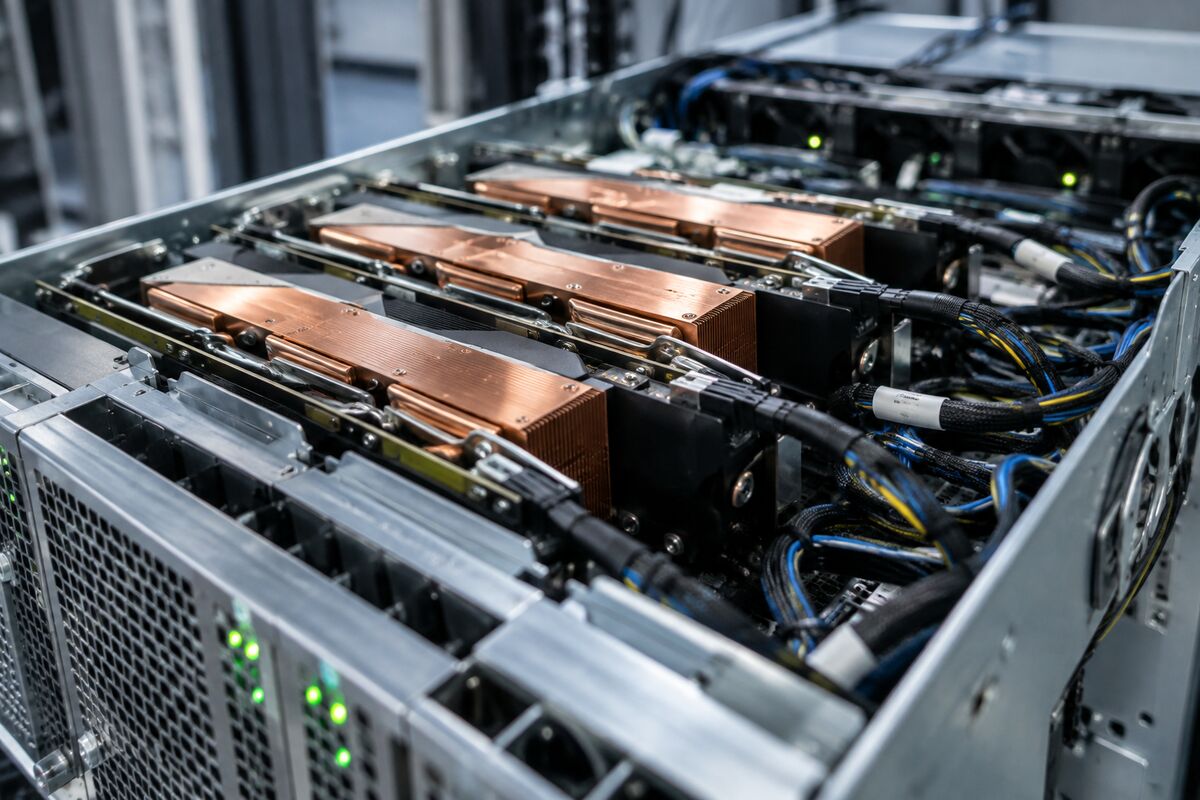
The proposed contracts would be connected to physical GPU capacity rather than solely to the share price of a semiconductor or infrastructure company. That distinction matters. A stock can move because of changing sentiment, valuation, earnings expectations or broader market positioning. GPU capacity, by contrast, represents a more direct link to the computing resources required by AI workloads.
Hyperbolic’s planned exchange could therefore create a reference point for participants whose economic exposure is tied to the availability or use of GPUs. The structure may give traders a way to express or offset views connected to compute capacity without relying only on listed equities or conventional derivatives.
That is the theory. The practical details that determine whether such a market becomes useful—contract terms, settlement mechanics, liquidity and participation—are not established here. The important point is that the proposed product is still developing, and its existence does not mean physical GPU futures are already widely traded.
Why the AI trade is watching
The proposal arrives after recent cracks in sentiment around the broader AI trade. For traders monitoring Nvidia ($NVDA), CoreWeave and other AI-compute exposures, a capacity-linked instrument could offer a different hedging reference from the underlying stocks.
Consider the portfolio problem in broad terms. A desk may have exposure to companies connected to AI infrastructure, but the factors affecting those positions will not always move in lockstep with the physical availability of GPUs. A futures market linked to capacity could potentially help separate those exposures: one instrument for the equity risk, another for a physical-compute variable.
That separation could be especially relevant when sentiment shifts faster than operating conditions. If AI-related equities experience sharp repricing while demand for compute capacity remains a distinct question, a physical-GPU market may provide information that stock and options markets do not capture cleanly. Conversely, changes in capacity conditions could become an additional signal for traders assessing AI infrastructure risk.
What options and futures desks could gain
Options and futures desks tend to value instruments that add another measurable source of risk. A GPU-capacity contract could potentially support hedging, relative-value analysis and price discovery around the physical resources underpinning AI workloads.
For options desks, the possible benefit is a more direct variable against which equity or volatility exposure could be assessed. For futures desks, the attraction may be a market tied to an operational input rather than a company’s full corporate profile. Neither use case is guaranteed, and both depend on the market reaching sufficient depth and reliability.
The proposed exchange also highlights a broader evolution in market structure. As AI infrastructure becomes a larger focus for investors and traders, financial instruments may begin targeting the physical constraints behind the narrative—not just the public companies associated with it. Hyperbolic’s effort is an early example of that direction, not a completed market.
The key distinction for traders is between a compelling market design and a mature, liquid hedging venue. Hyperbolic is developing the former; the latter would need to be demonstrated over time.
For now, the development is best viewed as a potential addition to the toolkit for participants exposed to AI infrastructure and semiconductor volatility. The link to physical GPU capacity is the differentiator. Whether that link becomes a practical hedge for positions involving $NVDA, CoreWeave and related AI-compute exposures will depend on how the proposed market develops.
Read the CNBC report on Hyperbolic’s proposed GPU futures marketBull/Bear Verdict
Bull Case: A market tied to physical GPU capacity could give traders monitoring $NVDA, CoreWeave and AI infrastructure a more direct hedging reference than equity exposure alone.
Bear Case: The market remains in development, and without established contract specifications, liquidity or broad trading activity, its usefulness as a hedge is still uncertain.