
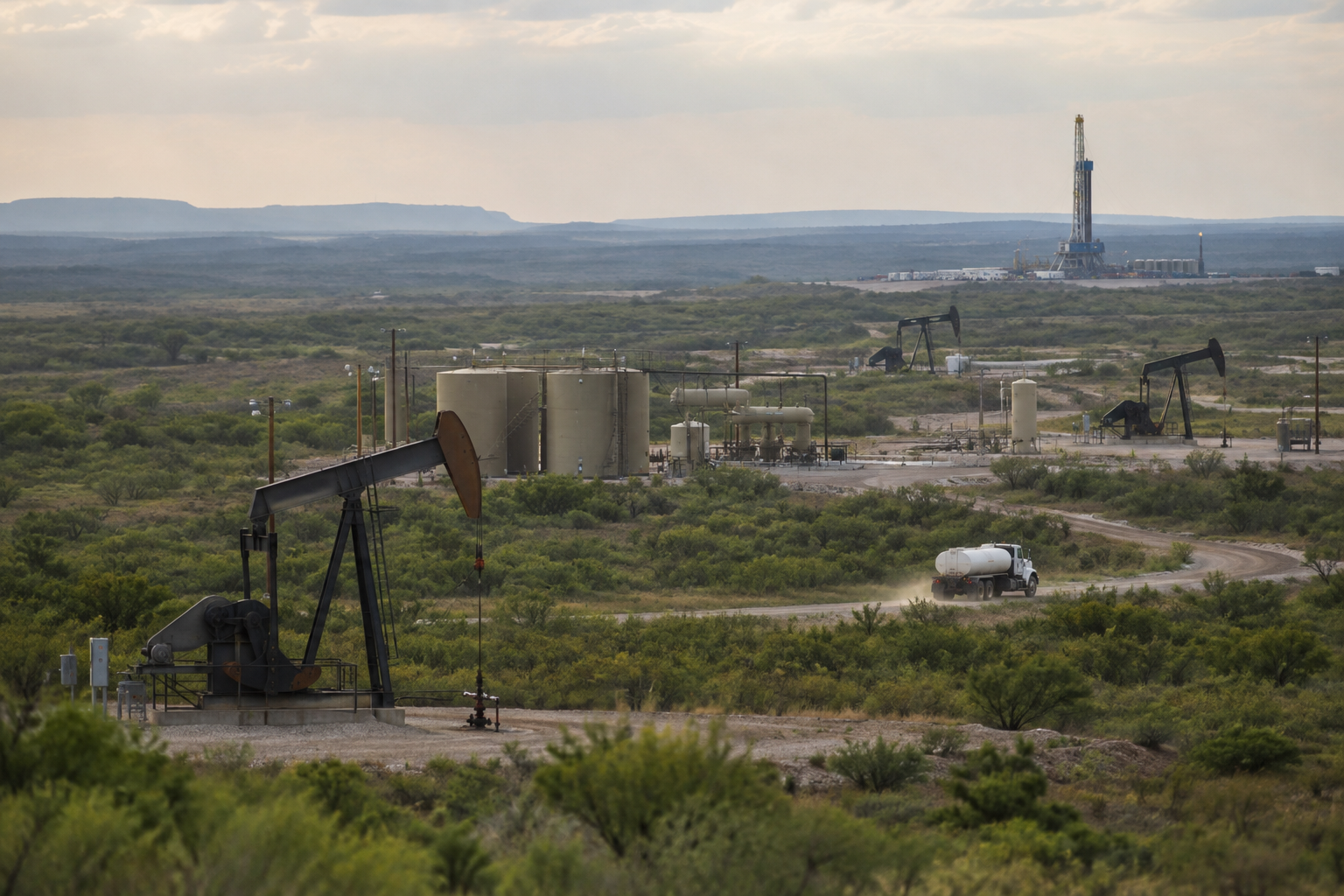
Crescent Energy’s agreement to acquire Devon Energy’s Eagle Ford shale assets for $4.2 billion is a major transaction for the US energy market. The deal gives Crescent a larger position in a prominent US shale region while placing Devon Energy in the role of seller.
More broadly, the transaction puts exploration and production consolidation back in the market’s spotlight. A $4.2 billion asset transfer is large enough to focus investor attention on how ownership of US oil and gas properties may continue to shift among industry participants.
The announced transaction, reported by Seeking Alpha, centers on Devon Energy’s Eagle Ford assets. The source does not provide production estimates, financing details, stock-price data, or closing conditions, so the market case rests first on the disclosed $4.2 billion valuation and the identities of the buyer and seller.
A notable US energy-sector transaction
The Eagle Ford deal qualifies as a significant US energy-sector merger and acquisition event because it involves a multibillion-dollar transfer of shale assets between two exploration and production companies. Its importance is not just the headline value. The transaction also illustrates how established energy properties can become the subject of major portfolio reshaping within the US market.
That distinction matters for investors tracking the sector. Rather than relying on unreported operating assumptions, the clearest signal is the scale of the announced consideration: $4.2 billion. That figure provides a concrete reference point for assessing the size of the transaction and may encourage closer scrutiny of additional acquisition or divestiture announcements involving US shale assets.
What it means for Crescent Energy
For Crescent Energy, the agreement represents an important expansion through the acquisition of Devon Energy’s Eagle Ford assets. The company will take on ownership of the properties once the transaction is completed, although the available information does not specify closing conditions, financing arrangements, production volumes, or expected financial results.
That missing detail is central to how the market may evaluate the deal over time. The $4.2 billion price identifies the scale of Crescent’s commitment, but it does not by itself establish the transaction’s future operating or financial impact. Investors may therefore focus on subsequent disclosures about the assets and the transaction rather than infer performance outcomes from the headline value alone.
Devon Energy’s role as seller
Devon Energy is the seller in the announced transaction. The reported information identifies the company’s Eagle Ford assets as the properties being acquired by Crescent Energy, but it does not provide additional detail about Devon’s rationale, the use of proceeds, or any broader portfolio strategy.
That limitation is important. The sale is a confirmed element of the deal, while interpretations about Devon’s next steps would go beyond the reported terms. For now, the market can state the transaction’s direction clearly: Crescent is the buyer, Devon is the seller, and the assets carry an announced value of $4.2 billion.
Consolidation remains the central market signal
The most defensible broader takeaway is that the Eagle Ford transaction may reinforce investor attention on consolidation among exploration and production companies. A deal of this size shows that US shale assets remain relevant targets for corporate transactions, even though the available announcement does not disclose the operating metrics needed to judge the assets independently.
That makes the transaction a useful market marker rather than a complete investment thesis. The $4.2 billion valuation establishes a significant benchmark, Crescent’s acquisition highlights its expanded role as an asset owner, and Devon’s sale underscores the continuing movement of US shale properties between industry participants. Further conclusions should wait for additional disclosed terms.
Bull/Bear Verdict
Bull Case: The $4.2 billion Eagle Ford acquisition could strengthen Crescent Energy’s position in US shale and may benefit from the market’s renewed focus on exploration and production consolidation.
Bear Case: The $4.2 billion headline value does not include disclosed production, financing, or closing-condition details, so the transaction’s eventual impact on Crescent Energy remains uncertain.