
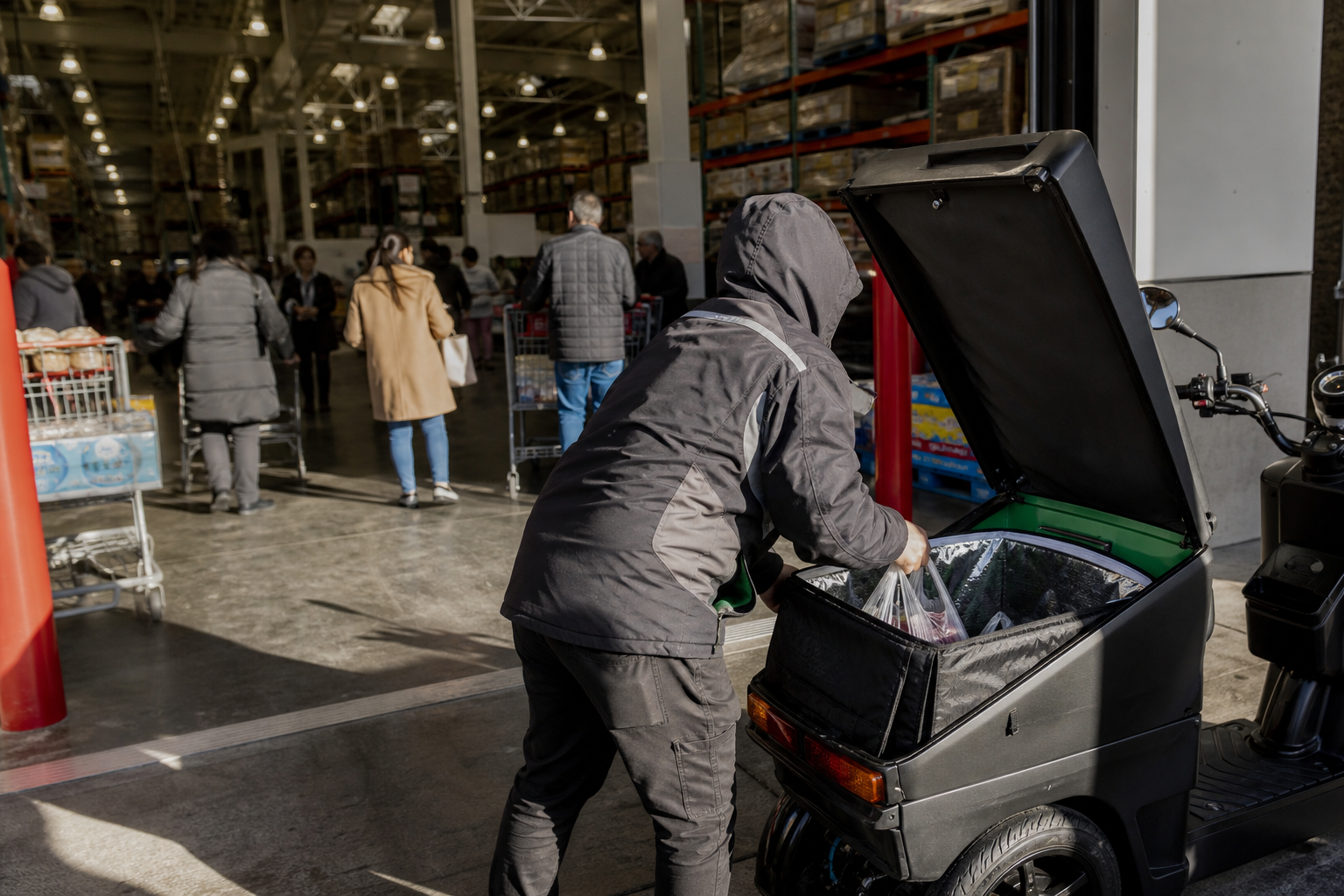
Costco and Uber Eats have officially expanded their partnership, and this is not just an incremental change—it's a seismic shift in the grocery delivery landscape. With the collaboration now spanning 47 states, up from just 17, the implications for both companies—and their competitors—are nothing short of groundbreaking.
This partnership enhancement signals Costco's aggressive push into the on-demand delivery space, a strategy that could redefine its business model. As consumers increasingly demand convenience, the ability to order groceries through Uber Eats places Costco in direct competition with other major players in the grocery delivery market.
Expanding Reach and Strategic Implications
The expansion to 47 states indicates a significant commitment from both Costco and Uber Eats to leverage their resources in a competitive market. For Costco, this move could bolster membership numbers as the appeal of convenience grows among shoppers. The convenience of ordering items directly from Costco through the Uber Eats platform could entice non-members, driving traffic and potentially converting them into paying members.
For Uber, this partnership enhances its portfolio, positioning the company as a key player in the grocery delivery sector. It suggests a strategic pivot that could lead to increased market share, particularly as consumers look for reliable grocery delivery options. The growth in demand for on-demand delivery services has been notable, and Uber Eats' ability to capitalize on that trend with a trusted name like Costco could prove advantageous.
Impact on Competitors
This expansion may put traditional grocery chains on high alert. Competitors who have yet to adopt robust delivery strategies will need to rethink their operations. With Costco and Uber Eats capturing a larger segment of the market, grocery retailers may be forced to innovate or risk losing ground. The implications of this partnership extend beyond just Costco and Uber; they highlight a potential shift in consumer behavior that may favor retailers who can offer seamless delivery services.
Moreover, as Costco leverages this partnership to enhance its delivery offerings, it could drive down prices through economies of scale, which may further challenge competitors. Retailers like Walmart and Amazon, who have established delivery systems, will have to react swiftly to maintain their competitive edge.
A Long-Term Perspective
Investors should consider the long-term implications of this partnership. Costco’s expansion into delivery aligns with broader trends in retail, where convenience and efficiency are critical. As more consumers turn to online shopping for groceries, Costco's strategic positioning could enhance its brand loyalty and overall market presence.
Furthermore, the partnership suggests a future where grocery delivery becomes increasingly mainstream. Companies that adapt to this trend may find themselves better positioned for sustained growth. Conversely, those that lag may face significant challenges in the evolving retail landscape.
As this partnership unfolds, the performance of both Costco ($COST) and Uber ($UBER) will be keenly watched by investors. The ability of these companies to execute their strategies effectively could determine the trajectory of their stock performance in the coming months.
In conclusion, the expansion of the Costco and Uber Eats partnership is a key development that could reshape the grocery delivery market. With both companies poised to capitalize on this collaboration, the competitive landscape will undoubtedly shift, prompting a reevaluation of strategies among rivals.
For more details on this partnership expansion, visit CNBC.