
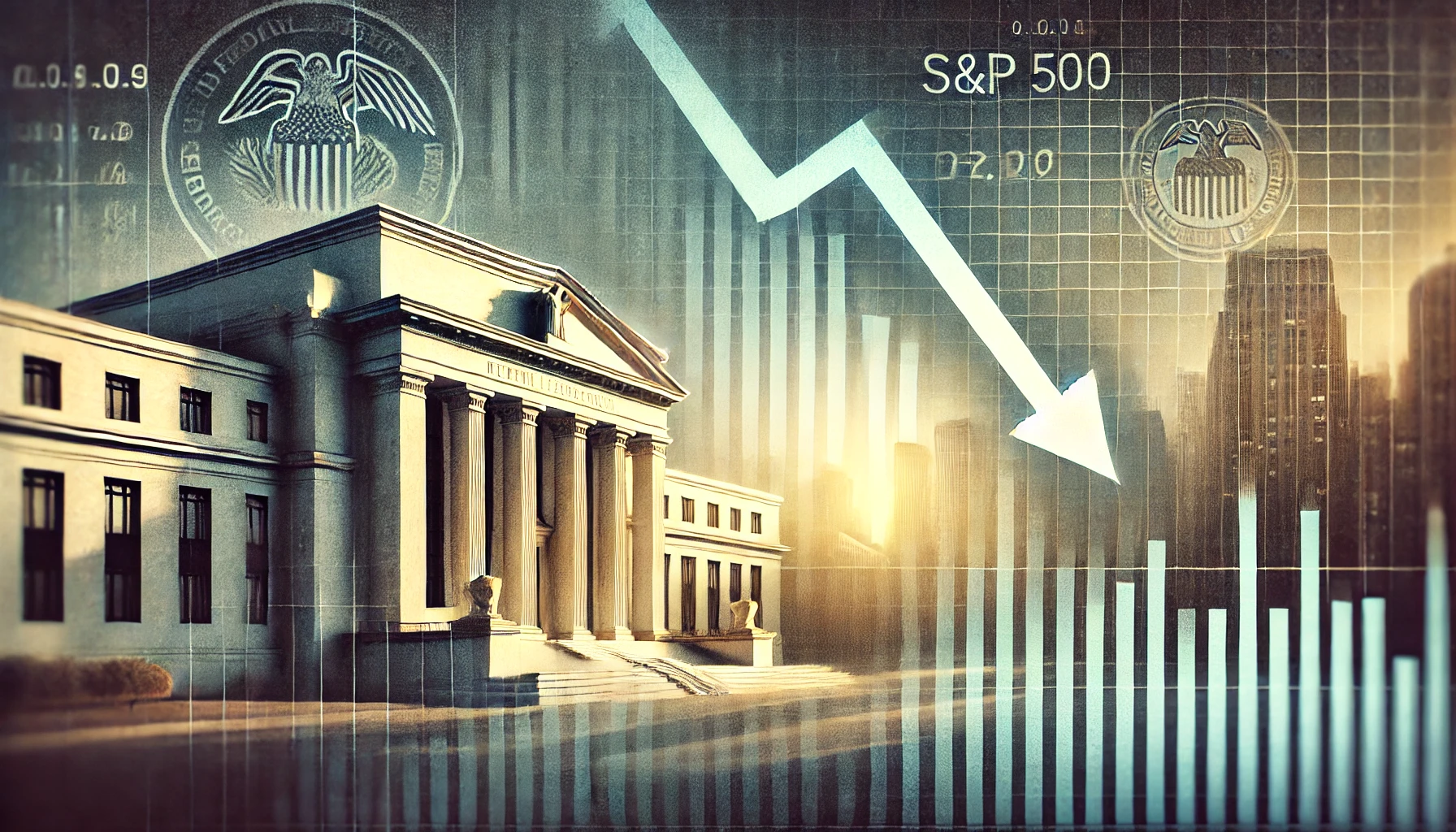
This week, Wall Street’s push for Federal Reserve interest-rate cuts reached a fever pitch, driven by a tumultuous market environment that revived fears of a potential recession. Yet, as the dust begins to settle, a new concern is surfacing: investors may be setting themselves up for disappointment by prematurely betting on substantial rate cuts from the Fed.
Diane Jaffee, a senior portfolio manager at TCW, warns that the Fed is unlikely to rush into aggressive rate cuts. “I don’t think they want to be seen as the ‘hot gun.’ That’s not what the Fed wants to do,” she told MarketWatch on Thursday. The speculative buzz earlier this week centered around an interim rate cut before the Fed’s September policy meeting, but recent data has tempered those expectations. Thursday’s jobless claims report showed fewer Americans filed for unemployment benefits than expected, reducing the likelihood of an imminent rate reduction.
This data provides a counterbalance to last week’s weak jobs report, which had fueled concerns that the Fed might have kept rates too high for too long, potentially paving the way for a recession. Jaffee sees the Fed’s September meeting as the most logical time for a rate cut but remains cautious, suggesting a 25 basis-point cut as the base case. “They want to get it right,” she said, acknowledging the delicate balance the Fed must strike.
The Unwinding of Rate-Cut Euphoria
Investors have been on edge since the U.S. unemployment rate hit a three-year high of 4.3% in July, triggering the Sahm rule—a key recession indicator. The market’s anxiety was further exacerbated by Monday’s sudden unwinding of the popular Japanese yen “carry trade,” which shook global equities and captured the attention of financial markets. The S&P 500 index ($SPX) suffered its worst daily loss in nearly two years as Treasury yields plummeted, sending investors scrambling for safe havens. The Cboe Volatility Index ($VIX), Wall Street’s “fear gauge,” also surged to extreme levels.
While volatility has since eased, with stocks trimming their weekly losses, the abrupt sell-off serves as a reminder of the fragility in today’s markets. Analysts at J.P. Morgan estimate that roughly 75% of the global carry trade has already unwound, reflecting a significant shift in market dynamics.
Brent Schutte, chief investment officer at Northwestern Mutual Wealth Management, is cautious about the labor market’s trajectory. “I think the labor market is weakening,” Schutte said, emphasizing the need for investors to prepare for continued volatility. “I think you have a whole group of people who want to be optimistic and buy stocks,” he added, but warned that investors should be prepared for the risks, especially if the U.S. slips into a recession.
Rate Cuts: No ‘Magic Elixir’ for the Market
Despite Thursday’s recovery in stocks, with the Dow Jones Industrial Average ($DJIA) and S&P 500 narrowing their weekly losses to 0.8% and 0.6%, respectively, and the Nasdaq Composite ($COMP) down 0.8%, the market remains on edge. A powerful rally in the first half of 2024 has kept the S&P 500 up 11.4% year-to-date, but the potential for further gains is increasingly tied to Fed policy moves.
Traders are now pricing in a nearly 60% chance of a 50 basis-point rate cut in September, a stark contrast to the sub-5% probability just a month ago, according to the CME FedWatch Tool. If this scenario plays out, the Fed’s benchmark rate would fall back to the 4.75%-5% range. Yet, the Fed has maintained its policy rate near a 20-year high of 5.25%-5.5% for over a year without triggering a recession—a testament to the economy’s resilience so far.
However, short-term rates suggest that recession-style cuts have already been priced in. Société Générale researchers note that short-term rates indicate more than 1% in cuts over the next six months, a threshold that has historically preceded a recession. Jitesh Kumar, an equity-derivatives strategist at SocGen, pointed out in a client note that traders “aren’t waiting around to find out” if a recession is coming, implying that Wall Street may once again be overestimating the Fed’s willingness to cut rates aggressively.
Should economic data fail to align with expectations of a downturn, another wave of volatility could sweep through the markets. October’s bond-market turbulence, which saw the 10-year Treasury yield briefly spike to 5%, serves as a recent example of how quickly market sentiment can shift.
Brent Schutte cautions against overreliance on rate cuts as a cure-all for economic woes. “Everyone thinks rate cuts are a magic elixir,” he said, reminding investors that the Fed has also lowered rates during economic downturns and recessions in the past. “I advise people to think about the ‘what ifs,'” Schutte added, suggesting that investors consider positioning in less popular areas of the market that may offer better resilience in uncertain times.
Key Takeaways:
- Caution Over Rate-Cut Speculation: Investors are eager for the Fed to cut rates, but betting on aggressive cuts could lead to disappointment and increased market volatility.
- Labor Market Concerns: With the unemployment rate rising and the Sahm rule triggered, investors should prepare for potential economic downturns.
- Market Volatility Risk: If economic data doesn’t support expectations for significant rate cuts, markets could experience another bout of turbulence.
Conclusion:
While the allure of Fed rate cuts is strong, traders and investors should tread carefully. Overconfidence in a dovish Fed could set the stage for another market correction, especially if economic indicators fail to justify the anticipated policy shifts. It’s essential to weigh the risks and be prepared for potential volatility ahead.


